
When pain lingers long enough, it begins to change how people live.
Movements become cautious. Activities that were once routine begin to require planning. Walking longer distances, exercising, or even getting through a workday may feel more demanding than before.
For many people living with chronic tendon or soft tissue issues, the challenge is not simply discomfort. It is the uncertainty that comes with it.
Will this ever improve?
Is surgery the only option?
Is there something that can help the body recover?
Over the past decade, one treatment has steadily gained attention in physical therapy clinics around the world: shockwave therapy.
Despite the name sounding dramatic, shockwave therapy is a non-invasive treatment designed to stimulate healing in tissues that have stopped responding to traditional approaches.
It does not involve surgery, injections, or medication.
Instead, it works by stimulating the body’s natural repair mechanisms.
For many people dealing with long-standing tendon problems, it can become a turning point in recovery.
Understanding Why Chronic Tendon Pain Develops
To understand how shockwave therapy helps, it’s useful to understand what happens when tendon injuries become chronic.
Tendons are the thick bands of connective tissue that attach muscle to bone. They are responsible for transmitting the force that allows movement to occur.
When tendons experience repeated stress—whether from sports, exercise, work activities, or daily life—they can develop microscopic damage.
In most cases, the body repairs these small injuries naturally.
But sometimes the repair process stalls.
Instead of healing completely, the tendon enters a state often referred to as tendinopathy.
The tissue becomes disorganized, circulation may decrease, and the body’s normal healing signals become less effective.
At this stage, rest alone rarely solves the problem.
The tendon needs stimulation to restart the healing process.
That is where shockwave therapy comes in.
What Is Shockwave Therapy?
Shockwave therapy is a treatment that uses acoustic pressure waves to stimulate healing in damaged tissues.
These waves travel through the skin and into the affected area, creating a series of controlled mechanical impulses.
While the sensation can feel unusual at first, the goal is not to damage tissue but to stimulate it.
The therapy helps the body in several ways:
• Improving local blood circulation
• Stimulating cellular repair processes
• Helping break up dysfunctional tissue patterns
• Encouraging regeneration in damaged tendons
In many ways, shockwave therapy acts as a wake-up call for tissues that have stopped healing properly.
The body responds by activating repair mechanisms that had slowed or stalled.
Conditions Often Treated With Shockwave Therapy
Shockwave therapy has become widely used for several chronic tendon conditions that can be difficult to treat with rest alone.
Some of the most common include:
Plantar fasciitis
Pain along the bottom of the foot that often feels worse in the morning.
Achilles tendinopathy
Persistent discomfort or stiffness in the Achilles tendon.
Tennis elbow (lateral epicondylitis)
Pain on the outside of the elbow related to repetitive gripping or lifting.
Patellar tendinopathy
Discomfort below the kneecap commonly seen in athletes.
Shoulder tendinopathy
Irritation in the rotator cuff tendons affecting overhead movements.
In each of these cases, the tendon tissue may have entered a chronic state where traditional rest and stretching are not enough.
Shockwave therapy helps re-activate the body’s healing response.
Why Traditional Treatments Sometimes Fall Short
Many people who eventually explore shockwave therapy have already tried several other approaches.
These may include rest, stretching, anti-inflammatory medications, braces, or injections.
While these strategies can provide temporary relief, they may not address the underlying issue within the tendon tissue itself.
The core challenge with chronic tendon conditions is that the tissue often requires mechanical stimulation to restart healing.
Simply reducing symptoms without stimulating repair can lead to recurring problems.
Shockwave therapy offers a way to directly influence the tissue environment and encourage regeneration.
The Science Behind the Treatment
Shockwave therapy works through several biological mechanisms that support tissue recovery.
Increased Circulation
The acoustic waves stimulate new blood vessel formation in the affected tissue.
Improved circulation helps deliver oxygen and nutrients necessary for healing.
Cellular Stimulation
Shockwave energy activates cells involved in tissue repair.
These cells help rebuild the collagen structure of the tendon.
Tissue Remodeling
The therapy helps break down disorganized scar tissue that may have formed during chronic injury.
As the body repairs the tissue, new collagen fibers align more efficiently.
Pain Modulation
Shockwave therapy also influences nerve activity in the area, which can help reduce pain signals.
Together, these mechanisms create an environment where healing becomes possible again.
What a Shockwave Therapy Session Looks Like
Shockwave therapy sessions are typically brief and performed in a physical therapy clinic.
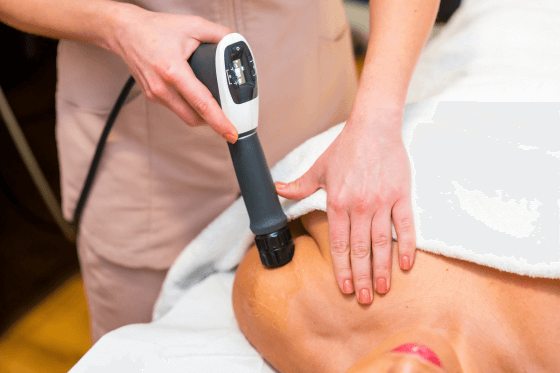
A handheld device delivers the acoustic waves to the affected area while a therapist guides the treatment.
Sessions often last 5 to 10 minutes depending on the condition and the treatment area.
Most people receive a series of treatments spaced over several weeks.
While the treatment can feel intense at times, it is generally well tolerated and does not require anesthesia.
One of the major advantages of shockwave therapy is that there is little to no downtime afterward.
Most people can return to normal daily activities shortly after treatment.
Combining Shockwave Therapy With Physical Therapy
Shockwave therapy is most effective when combined with a structured physical therapy program.
While the treatment stimulates tissue healing, exercise helps restore strength and movement patterns that support long-term recovery.
A comprehensive plan may include:
• Progressive strengthening exercises
• Mobility work for surrounding joints
• Movement retraining
• Load management strategies
This combination allows the tissue to heal while also preparing the body to handle future activity safely.
Who May Benefit Most From Shockwave Therapy
Shockwave therapy is often recommended for individuals who:
• Have chronic tendon issues lasting several months
• Haven’t improved with rest or basic treatments
• Want to avoid surgery or injections
• Are aiming return to activity more confidently
Because the treatment targets the root cause of chronic tendon conditions, it can help people move forward after months—or sometimes years—of frustration.
A Non-Surgical Option for Persistent Pain
One of the most appealing aspects of shockwave therapy is that it provides a non-surgical option for chronic musculoskeletal conditions.
Surgery often requires significant recovery time and rehabilitation.
Shockwave therapy, by contrast, works with the body’s natural healing ability.
By stimulating the repair process rather than replacing tissue, it allows many individuals to improve without invasive procedures.
For those hoping to avoid surgery, this can be an encouraging alternative.
The Bigger Picture of Recovery
Chronic pain can influence more than just the injured tissue.
It can affect confidence in movement, activity levels, and overall quality of life.
Restoring physical function often requires addressing both the injury and the way the body moves.
Shockwave therapy provides an effective tool within a broader rehabilitation strategy.
When combined with thoughtful exercise and guidance, it can help people regain the ability to move more freely and confidently.
A Supportive Next Step
If persistent tendon or soft tissue pain has been limiting activity, it may be worth exploring whether shockwave therapy could help.
At Houghton Physical Therapy, experienced therapists can evaluate the condition, discuss treatment options, and determine whether shockwave therapy may be appropriate.
A Free Discovery Visit offers an opportunity to ask questions, discuss symptoms, and learn more about how treatment may support recovery.
There is no pressure—just a chance to better understand the options available.
👉 Schedule a Free Discovery Visit:
https://houghtonphysicaltherapy.com/contact-us/
Sometimes progress begins with a conversation and a clear plan forward.
Tags: chronic pain, houghton physical therapy, shockwave therapy, attleboro, soft tissue healing